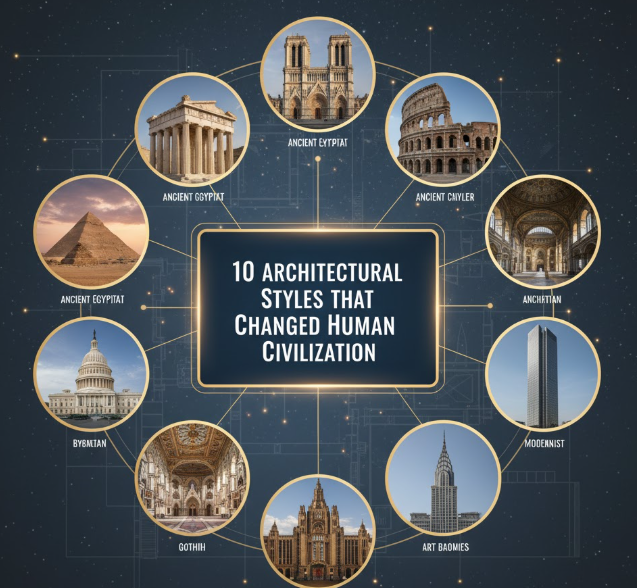
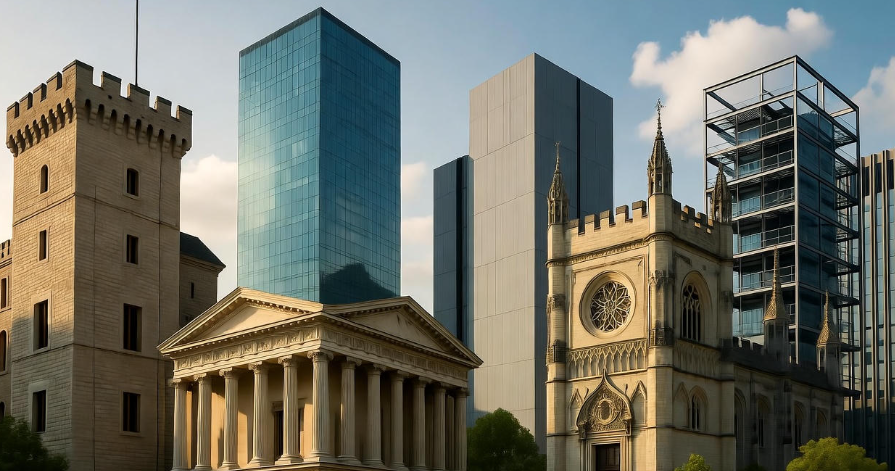

Architecture is more than just buildings; it is a reflection of human creativity, culture, and technology. Over centuries, architecture has evolved in ways that are fascinating and sometimes surprising. Ancient architecture and modern architecture are two distinct eras, each with unique characteristics. Let’s explore the 7 key differences between them.
1. Materials Used 🏛️ vs 🏢
Ancient architecture relied heavily on natural materials. Stone, clay, wood, and brick were the primary materials. For example, the pyramids of Egypt were made of massive limestone blocks, and the Great Wall of China used stone and tamped earth.
Modern architecture, on the other hand, is dominated by industrial materials like steel, glass, reinforced concrete, and composites. These materials allow architects to build taller, lighter, and more flexible structures than ever before.
| Feature | Ancient Architecture | Modern Architecture |
|---|---|---|
| Primary Materials | Stone, brick, wood, clay | Steel, glass, concrete, composites |
| Durability | Very long-lasting | Can be long-lasting but depends on maintenance |
| Flexibility | Limited shapes and heights | High flexibility in design |
2. Design Philosophy 🎨 vs ⚙️
Ancient architects often focused on symbolism and spirituality. Structures like temples, pyramids, and mosques were built to honor gods, kings, or the cosmos. Every curve, column, and carving had a deeper meaning.
Modern architects, however, emphasize functionality, minimalism, and efficiency. The “form follows function” principle dominates modern design. Skyscrapers, office buildings, and homes are built to meet practical needs first, although aesthetics are still important.
3. Structural Techniques 🧱 vs 🏗️
In ancient times, architecture relied on manual labor and simple machines like pulleys and levers. Stone blocks were cut, transported, and assembled meticulously, often over decades.
Modern architecture employs advanced technology—cranes, computer-aided design (CAD), 3D printing, and prefabricated modules. Structures that once seemed impossible, like floating bridges or twisting towers, are now achievable.
4. Ornamentation and Decoration ✨ vs 🪟
Ancient buildings were often richly decorated. Intricate carvings, murals, frescoes, and sculptures were standard. The Parthenon in Greece, for instance, has detailed friezes and statues, while Egyptian temples feature hieroglyphs and painted walls.
Modern architecture, especially contemporary minimalist styles, favors simplicity. Glass facades, smooth concrete walls, and clean lines dominate. Decorations are often functional—like solar panels, ventilation grids, or light fixtures.
5. Scale and Purpose 🏰 vs 🌆
Ancient structures were massive and monumental. Temples, palaces, and pyramids were built to impress, dominate, and last thousands of years. Their scale often reflected the power of rulers or gods.
Modern architecture can also be massive, like skyscrapers, but scale is often determined by utility. Urban planning, population density, and environmental impact are considered. Buildings aim to serve people efficiently, not just impress.
6. Sustainability and Environment 🌿
Ancient architects naturally considered climate and local resources. Thick walls, small windows, and natural ventilation were common in hot climates, while stone and timber insulated cold regions.
Modern architects are now actively focusing on sustainability. Energy-efficient glass, solar panels, green roofs, and eco-friendly materials are increasingly standard. While ancient architecture was inherently sustainable by necessity, modern architecture strives for sustainability by design.
7. Innovation and Experimentation 🔄
Ancient architecture followed strict rules and traditions. Egyptian pyramids, Roman amphitheaters, and Greek temples all adhered to specific styles. Innovation existed but was slow and gradual.
Modern architecture thrives on experimentation. Architects explore new forms, unconventional angles, and mixed materials. Parametric design, modular structures, and floating buildings are examples of how far modern innovation has gone.
| Aspect | Ancient Architecture | Modern Architecture |
|---|---|---|
| Innovation | Slow, conservative | Rapid, experimental |
| Purpose | Religious, ceremonial, monumental | Practical, aesthetic, functional |
| Environmental Adaptation | Based on local climate | Technology-driven sustainability |
Conclusion
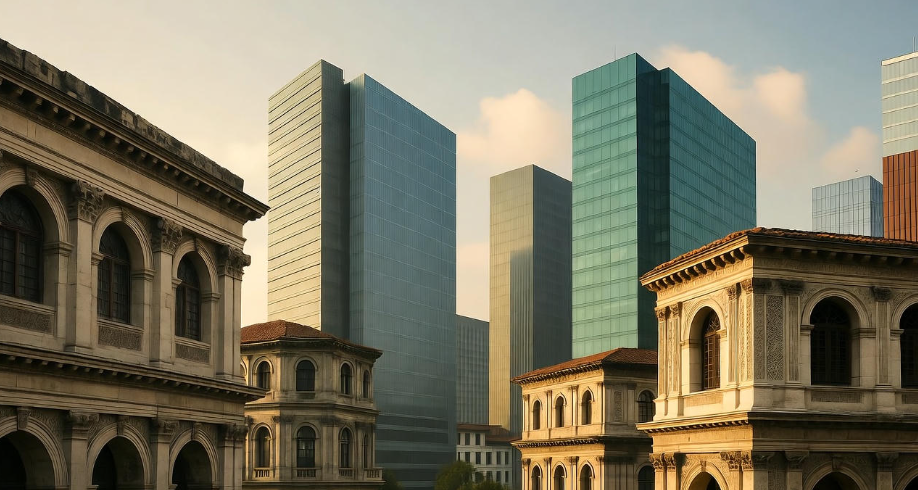
The evolution from ancient to modern architecture shows how human ingenuity has grown alongside technology. Ancient architecture teaches us about culture, tradition, and craftsmanship. Modern architecture demonstrates creativity, efficiency, and technological mastery. Both eras are fascinating, and each has lessons we can apply today.
Whether you admire the pyramids of Egypt or the Burj Khalifa in Dubai, it’s clear: architecture is not just about buildings—it’s about humanity itself. 🌍🏗️
FAQs
Q1: Which is more durable, ancient or modern buildings?
Ancient buildings were made to last thousands of years, like the Pyramids. Modern buildings can last long too, but their durability depends on materials and maintenance.
Q2: Are modern buildings more environmentally friendly than ancient ones?
Not always. Ancient buildings were naturally adapted to their environment. Modern architecture can be very eco-friendly if designed with sustainable materials and energy-efficient systems.
Q3: Why were ancient buildings so decorated?
Decoration often had cultural, religious, or political significance. Every detail told a story or honored a deity or ruler.
Q4: Can modern architecture be artistic like ancient architecture?
Absolutely! Modern architecture can be highly artistic, though the style is different. Minimalism, futuristic forms, and structural elegance are modern art in building form.
Q5: Which era inspires today’s architects more?
Both. Many modern architects blend ancient inspiration with modern technology to create innovative, timeless designs.