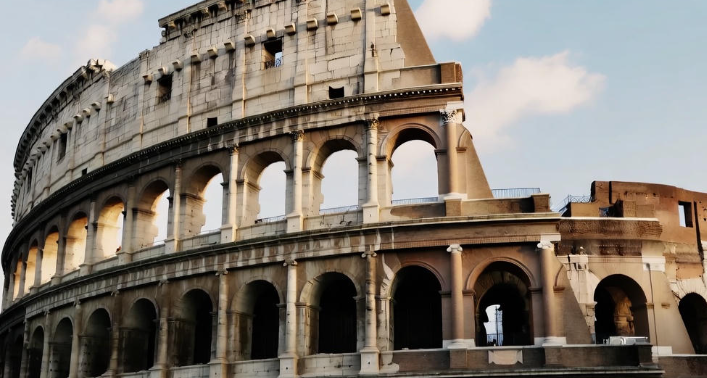

When people think of ancient Rome, one structure instantly comes to mind — the Colosseum. Standing tall in the heart of Rome, this massive amphitheater is nearly 2,000 years old, yet it continues to leave even modern engineers scratching their heads in awe. The Colosseum is more than just a ruin; it’s a story carved in stone and concrete that refuses to fade. But what exactly makes this ancient arena such an engineering masterpiece that even today’s builders can’t stop admiring it? Let’s explore.
The Birth of a Marvel
The Colosseum, originally known as the Flavian Amphitheatre, was started under Emperor Vespasian around 70 AD and completed by his son Titus in 80 AD. It could hold about 50,000–80,000 people—think about that for a second. No cranes, no modern machinery, no electric tools. Just manpower, pulleys, and pure ingenuity.
Built primarily of concrete, travertine limestone, and volcanic rock (tuff), the Colosseum stretched over 189 meters long and 156 meters wide, with a height of about 48 meters. The builders used a combination of Roman concrete and interlocking arches that made the structure flexible and shock-resistant — something even modern architects find fascinating.
The Secret Ingredient: Roman Concrete 🧱
One of the biggest mysteries behind the Colosseum’s durability is the Roman concrete, known as opus caementicium. Unlike modern cement, which weakens over time, Roman concrete actually grows stronger. The reason lies in its unique mixture — volcanic ash, lime, and seawater.
The chemical reaction between these materials created a self-healing property. Whenever cracks formed, minerals like strätlingite would grow inside the cracks and seal them up. Modern engineers have tried to replicate this formula, and surprisingly, even with all our technology, we haven’t completely matched it.
| Roman Concrete vs. Modern Concrete | Roman Concrete | Modern Concrete |
|---|---|---|
| Durability | Increases over time | Decreases over time |
| Main Ingredients | Volcanic ash, lime, seawater | Portland cement, sand, gravel |
| Self-healing | Yes | No (requires repair) |
| Environmental impact | Low (no CO₂-heavy production) | High (cement industry emits CO₂) |
It’s no wonder modern engineers and environmental scientists are now revisiting this ancient mix as a sustainable alternative for future buildings.
Design That Defies Time ⏳
The Colosseum’s design was ahead of its time. The entire structure worked like a modern-day stadium — complete with entry gates, corridors, and seating arrangements. It had 80 entrances so crowds could enter and exit quickly, an idea still used in sports arenas today.
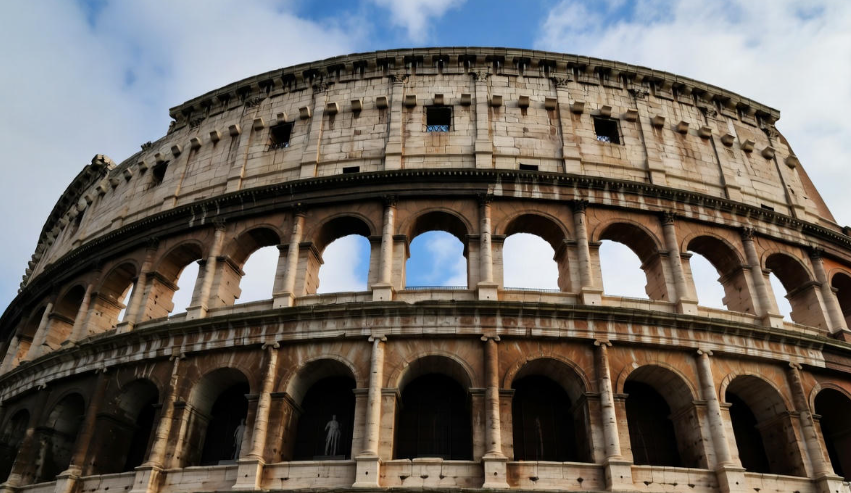
The Romans used a system of arches and vaults that distributed weight evenly across the structure, preventing collapse. Each arch functioned as a load-bearing element, creating both strength and flexibility. Engineers often point out that if the Colosseum were built with straight beams instead of arches, it would’ve crumbled centuries ago.
The elliptical design ensured everyone in the audience had a clear view of the arena floor. The seating arrangement also reflected Roman society — the closer you sat to the action, the higher your social rank.
The Hidden Underground World (Hypogeum)
Under the arena floor was a complex network of tunnels, cages, and lifts known as the hypogeum. It’s here where animals, gladiators, and stage equipment were kept before their dramatic appearances. The system had about 36 trapdoors and pulleys that could raise or lower props and fighters, creating surprise effects for the audience.
In a way, the Romans invented stage mechanics centuries before modern theater technology existed. When you think about it, it’s like an ancient version of backstage automation used in today’s Broadway shows — only powered by human and animal strength instead of electricity.
The Mastery of Drainage and Ventilation Systems 💧
One of the most overlooked engineering feats of the Colosseum is its water management system. The structure had a smart drainage system underneath, designed to handle Rome’s heavy rains and even mock sea battles. Some historians believe the arena could be flooded for short naval shows — a concept that still amazes hydrological engineers.
Moreover, the open arches and tiered seating acted as natural ventilation, keeping air flowing even during the hot Roman summers. Combined with retractable shades called velarium (massive canvas awnings), spectators could stay cool and comfortable. The design was so efficient that some modern stadiums have borrowed these very principles.
Earthquake-Resistant Before It Was Cool ⚡
Rome lies in a seismically active area, yet parts of the Colosseum still stand firm today. How? The answer lies in its foundation and materials. The Romans used a layered base of travertine and tuff stone to absorb vibrations.
Additionally, the arches and vaults created a flexible framework that distributed stress during tremors, preventing catastrophic failure. Engineers today use similar techniques, such as base isolation and flexible joints, to protect skyscrapers from earthquakes — an idea inspired, in part, by ancient Roman structures.
Architectural Harmony: Strength Meets Beauty 🎨
While the Colosseum was built for entertainment — often violent — it was also a showcase of Roman aesthetics. The exterior had three levels of arches, each framed by different classical columns: Doric on the first, Ionic on the second, and Corinthian on the third. This layering of styles gave the structure elegance while maintaining its strength.
Modern architects admire this balance of function and beauty. It’s rare even today to see a building that’s both this practical and visually stunning.
The Colosseum’s Legacy in Modern Architecture
From sports arenas to theaters, the Colosseum’s influence is everywhere. Modern stadiums like the AT&T Stadium in Texas and the Olympic Stadium in Rome borrow heavily from its design principles.
Take the idea of crowd management — multiple exits, clear pathways, and tiered seating — all inspired by Roman amphitheaters. Even the term “arena” comes from the Latin word harena, meaning sand, which was used to soak up blood and fluids during fights.
In essence, every time we walk into a modern stadium, we’re stepping into a concept the Romans perfected nearly two millennia ago.
What Modern Engineers Say
When engineers study the Colosseum today, they see a blend of simplicity and genius. Its structural system is so well-designed that it naturally resists time, weather, and even partial collapse. Despite wars, earthquakes, and pollution, it still stands tall.
Many engineering schools use the Colosseum as a case study to teach lessons about material science, load distribution, and sustainable construction. It’s a living textbook — one that doesn’t need rewriting.
Interesting Facts That Will Surprise You 🤯
-
The Colosseum could empty its 50,000+ spectators in under 15 minutes, thanks to efficient exit routes.
-
Over 100,000 cubic meters of travertine stone were used in construction.
-
It once had a retractable roof system (velarium), operated by sailors.
-
The Colosseum has survived over 2000 years, including several major earthquakes.
-
It inspired designs for stadiums in France, Spain, and the United States.
Why It Still Matters
The Colosseum isn’t just a symbol of Rome’s past — it’s a lesson for the future. In an age where concrete buildings crumble within decades, this ancient marvel reminds us that good engineering is not about expensive technology but about understanding nature, balance, and materials.
The Romans worked with what they had — yet created something that outlived empires, wars, and revolutions. And that’s why it still amazes modern engineers: it’s not just how it was built, but how it’s still standing.
FAQs About the Colosseum and Its Engineering
Q1: Why hasn’t the Colosseum completely collapsed after so many centuries?
Because of its durable materials (like Roman concrete) and smart structural design using arches that distribute weight evenly, allowing flexibility during earthquakes and erosion.
Q2: How long did it take to build the Colosseum?
It took around 8 to 10 years, which is incredibly fast for a structure of that size, especially considering the tools and methods of that era.
Q3: Could the Colosseum really be flooded for naval shows?
Yes! Some ancient accounts suggest that the arena floor could be removed or flooded for mock sea battles, though historians still debate how frequently this happened.
Q4: What lessons do modern engineers learn from the Colosseum?
They study its material strength, earthquake resistance, crowd flow management, and sustainable construction techniques — all of which remain relevant in today’s designs.
Q5: Can Roman concrete be recreated today?
Scientists have come close, but the exact process — especially how it “self-heals” — is still being researched. Some companies are now experimenting with similar eco-friendly concretes for future use.
-
🏗️ Discover timeless designs from ancient Europe! Read next: 7 Timeless Architectural Wonders of Ancient Greece 🏛️
Final Thoughts 🌍
When you stand before the Colosseum today, you’re not just looking at old stone — you’re looking at an ancient blueprint that still shapes modern architecture. It’s a bridge between history and innovation, between art and science.
The Romans didn’t have machines, AI, or modern tools, yet they built something that challenges even the smartest minds of today. The Colosseum isn’t just a ruin — it’s a timeless reminder that true engineering is both an art and a legacy.