
Have you ever stood in front of a picture of an ancient Mayan pyramid and thought — “How on earth did they do that without cranes, steel, or even the wheel?” 🤔 Well, you’re not alone. The Mayan civilization, one of the most fascinating and intelligent cultures in human history, managed to build massive cities, tall pyramids, and complex road systems long before modern construction tools even existed.
Let’s take a walk through time to see how the Mayans turned raw jungle into thriving cities that still puzzle scientists today.
The Mystery Behind Mayan Engineering
The Mayans didn’t have metal tools, beasts of burden like horses or oxen, or even wheeled carts to move heavy materials. Yet somehow, they built enormous cities with temples, palaces, plazas, and stone roads stretching for miles.
So, how did they do it? It all comes down to smart planning, resourcefulness, and pure human determination. The Mayans were masters at using what nature gave them — limestone, wood, clay, and human strength.
They didn’t just build cities; they designed them in ways that made sense for their environment, religion, and lifestyle.
Using Limestone — Nature’s Gift in Stone Form 🪨
Most Mayan cities were built using limestone, which was both abundant and easy to shape. Since many of their cities were located near limestone-rich areas, they didn’t have to move materials too far — a major advantage in those times.
To create building blocks, they would quarry limestone, heat it in large stone kilns, and then cut it using stone tools like obsidian blades. Surprisingly, despite not having metal tools, they were able to create perfectly fitted stones that stacked together with remarkable precision.
Here’s a quick look at what made limestone so valuable to the Mayans:
| Property | Why It Helped the Mayans |
|---|---|
| Soft when freshly quarried | Easy to shape using stone tools |
| Hardens over time | Became durable for temples and pyramids |
| Naturally abundant | Readily available near city sites |
| Could be made into lime plaster | Used for smooth walls and decorative finishes |
Even without iron or steel, the Mayans turned this simple stone into architectural wonders that could withstand centuries of rain, wind, and even earthquakes.
Building Pyramids and Temples Without Machines
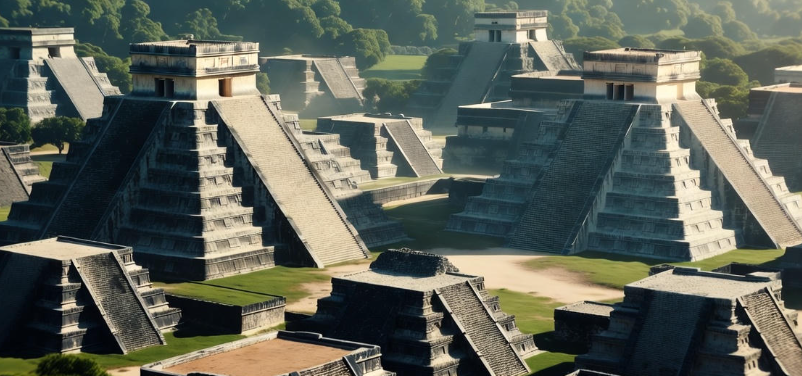
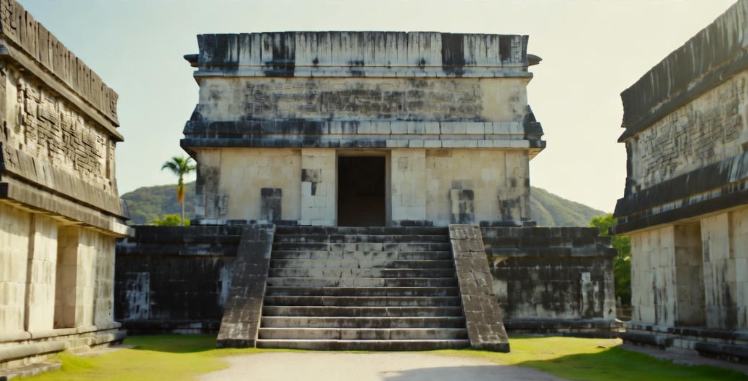
One of the greatest marvels of Mayan construction is the pyramid — those massive stone structures that rise high above the jungle canopy. These pyramids often served as temples for religious ceremonies or as tombs for rulers.
But here’s the incredible part — they built them entirely by hand. Workers used wooden levers, ropes, and ramps to move heavy stones up layer by layer.
The process was slow and required thousands of laborers, but the Mayans were extremely organized. They used teams to haul stones, skilled masons to shape them, and architects to plan the layout.
Each pyramid, such as the one at Chichén Itzá or Tikal, was aligned with astronomical events like the solstice or equinox. This shows that Mayan architects weren’t just builders — they were also scientists who understood the stars. 🌞🌕
Planning Perfect Cities in the Jungle 🌿
If you think of the jungle as an obstacle, the Mayans thought of it as an opportunity. They didn’t just clear land randomly — they carefully planned their cities around water sources, elevation, and sacred geography.
Cities like Tikal, Palenque, and Copán were built with an understanding of their environment. The Mayans designed reservoirs to collect rainwater during the wet season, ensuring there was enough during dry months. They even created drainage systems under plazas and courtyards to prevent flooding.
Unlike modern cities with straight streets, Mayan cities were built with open plazas and connected by sacbeob (white roads) made from crushed limestone. These ancient highways connected temples, homes, and neighboring cities — a sign of advanced city planning.
Tools Made from Nature 🌳
Without metal, the Mayans relied on nature’s toolkit. Here’s how they replaced modern equipment:
| Modern Tool | Mayan Alternative | Material Used |
|---|---|---|
| Steel chisel | Stone chisel | Obsidian, flint |
| Hammer | Stone mallet | Basalt or limestone |
| Saw | Cord saw | Fiber ropes with sand |
| Wheelbarrow | Human transport | Carried by hand or in teams |
It’s truly amazing how creative they were with such limited materials. They didn’t have oxen or carts to haul loads, so they relied on teamwork and carefully planned construction techniques.
Human Labor and Social Organization
You might be wondering — who did all the building?
The Mayan civilization had a highly organized society. Large projects were carried out under the supervision of nobles, priests, and architects. Farmers often helped during non-farming seasons, meaning thousands of workers could be mobilized at once.
This cooperative system wasn’t forced slavery (at least in most regions) — it was part of their community effort, deeply connected to religion and service to the gods. Building temples and cities was seen as a sacred duty.
Mathematics and Astronomy in Architecture 🌌
Mayan cities weren’t just random clusters of buildings; they followed mathematical and astronomical patterns. The Mayans were expert astronomers who tracked the movement of planets and stars.
For instance, the Temple of Kukulcán in Chichén Itzá was designed so that on the spring and autumn equinox, sunlight creates the illusion of a serpent slithering down the stairs.
That level of precision, without any modern measuring instruments, shows their deep understanding of geometry, calendar systems, and astronomy.
Building Without the Wheel — How Did They Move Stones?
The Mayans didn’t use the wheel for construction, even though they knew about it (it appears in some toys). The jungle terrain made wheeled carts impractical, so they used logs, ramps, and sleds to move materials.
In some areas, they used wet clay tracks to reduce friction, making it easier to slide large stones across short distances. It might sound simple, but it was extremely effective.
Decorating the Cities — Color, Art, and Meaning 🎨
Once the buildings were complete, the Mayans didn’t leave them as plain gray stones. They painted walls in bright reds, blues, and yellows using natural pigments made from plants and minerals.
Art covered every inch of their cities — carvings of gods, rulers, and animals told stories of creation and power. Hieroglyphic inscriptions recorded history and religious beliefs.
In short, Mayan cities weren’t just places to live — they were living art galleries that celebrated their culture.
Sustainability — Building in Harmony with Nature 🌎
What’s even more impressive is that the Mayans built cities sustainably. They didn’t destroy the jungle completely; instead, they used it smartly.
They practiced forest management, rotating farmlands to avoid soil exhaustion. They collected rainwater naturally, and even recycled old buildings by constructing new layers on top of old ones.
That’s right — some Mayan pyramids are actually several older pyramids hidden inside newer ones!
Why Their Cities Still Stand Today
It’s been over a thousand years since many of these cities were abandoned, yet the structures still stand. Why?
Because they were built on solid foundations and designed to last. The use of limestone, lime plaster, and careful engineering techniques helped them resist time and weather.
Modern archaeologists still marvel at how these buildings remain standing without the help of steel or concrete.
Fascinating Facts About Mayan Construction 🧱
-
The Mayans built observatories without telescopes but still tracked Venus and eclipses accurately.
-
Some temples had acoustic designs — clapping at the base of the Temple of Kukulcán produces an echo like a bird call!
-
They used gravity-fed plumbing systems in certain cities like Palenque — centuries before Europe had such systems.
-
Many cities were connected through road networks that extended over 250 kilometers.
Lessons Modern Engineers Can Learn from the Mayans
Modern architecture often focuses on speed and technology, but the Mayans remind us that patience, teamwork, and respect for the environment can produce something that lasts.
They built with precision, purpose, and sustainability — something many modern cities could still learn from today.
In Short (A Quick Summary Table)
| Key Aspect | How Mayans Managed It Without Modern Tools |
|---|---|
| Building Material | Limestone, clay, and wood |
| Transport | Manual labor, ramps, sleds |
| Tools | Obsidian, flint, and stone |
| City Planning | Based on astronomy and water systems |
| Construction Design | Layered pyramids, plazas, temples |
| Sustainability | Water storage, soil care, recycling structures |
FAQs About Mayan Construction 🏗️
Q1. How did the Mayans cut stone without metal tools?
They used sharp volcanic stones like obsidian and flint to chip and shape limestone blocks. These stones were strong enough to carve detailed edges.
Q2. Did the Mayans really not use the wheel for building?
Correct — while they knew about the wheel, the dense jungles and uneven terrain made it impractical for moving heavy stones.
Q3. How long did it take to build a Mayan pyramid?
Depending on size, a pyramid could take decades to complete, sometimes even over a century, as generations added new layers.
Q4. Were all Mayan cities the same in design?
No, each city had its own layout, but most included temples, palaces, plazas, and ball courts — all arranged based on religious and astronomical significance.
Q5. Why did Mayan cities eventually get abandoned?
There are several theories — overpopulation, droughts, warfare, or environmental stress — but no single cause has been proven yet.
Final Thoughts 🌄
It’s almost poetic how the Mayans built so much with so little. No modern cranes, no bulldozers, no drills — just brainpower, teamwork, and respect for nature.
Their cities were not just architectural feats; they were symbols of their deep understanding of science, religion, and the world around them. Even today, their ruins stand as a reminder that human creativity can achieve the impossible — even without modern tools.
Next time you see a Mayan temple rising through the jungle mist, take a moment to imagine the hands that built it — one stone, one sweat drop, one dream at a time. 🌿✨