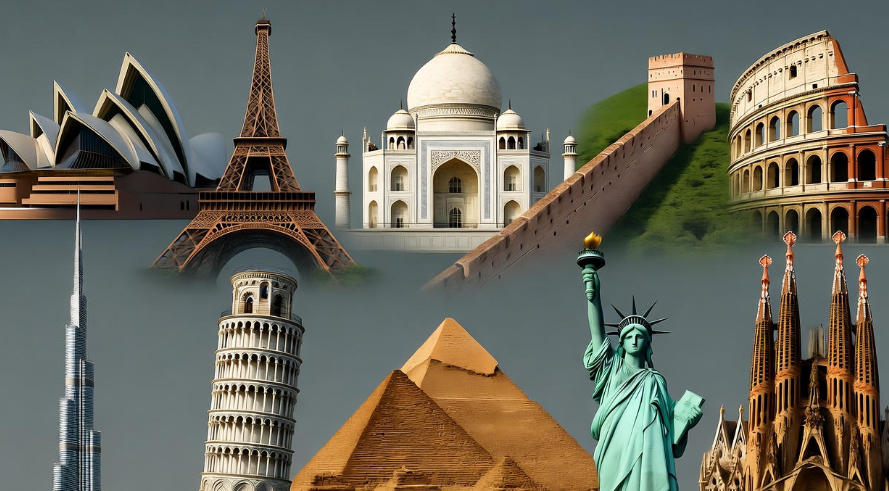

Buildings are more than just bricks and mortar. They tell stories about history, culture, innovation, and even human ambition. Around the world, some structures stand tall not just physically, but symbolically, becoming landmarks that define cities, countries, and sometimes entire eras. Let’s explore ten of the most iconic buildings that have captured the world’s imagination. 🌏
1. Eiffel Tower – Paris, France
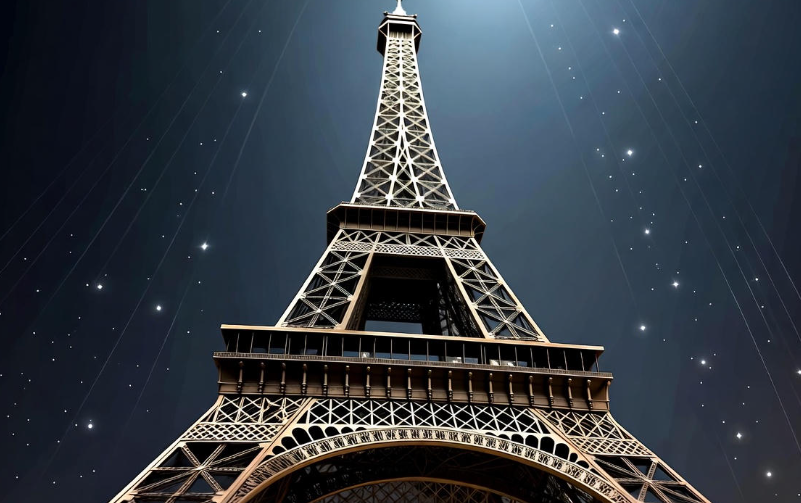
No list of iconic buildings is complete without the Eiffel Tower. Built in 1889 for the World’s Fair, it was initially criticized by many artists and intellectuals. But today, it’s one of the most recognized structures worldwide. Standing at 324 meters, it was the tallest man-made structure for over 40 years. Its iron lattice design is not just visually stunning but also an engineering marvel.
-
Visitors per year: ~7 million
-
Construction cost: 7.8 million francs (at the time)
-
Fun fact: The tower grows about 6 inches in summer due to thermal expansion. ☀️
2. Burj Khalifa – Dubai, UAE
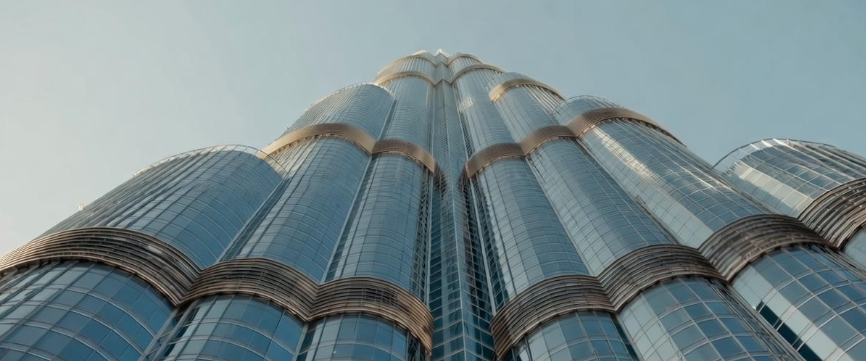
The Burj Khalifa isn’t just the tallest building in the world at 828 meters; it’s a symbol of modern architectural ambition. Opened in 2010, it took six years and over 12,000 workers to complete. Its design is inspired by the desert flower Hymenocallis, giving it an elegant tapering form.
-
Floors: 163
-
Observation decks: 148th and 125th
-
Unique fact: It can be seen from 95 kilometers away on a clear day. 🏙️
3. Taj Mahal – Agra, India
Often described as a “teardrop on the cheek of eternity,” the Taj Mahal is an iconic mausoleum built by Emperor Shah Jahan in memory of his wife Mumtaz Mahal. Its white marble, intricate carvings, and perfectly symmetrical layout make it an architectural masterpiece.
-
Construction period: 1632–1653
-
Material: White marble from Makrana, Rajasthan
-
Visitor tip: Sunrise is the best time for photographs as the marble glows softly. 🌅
4. Sydney Opera House – Sydney, Australia
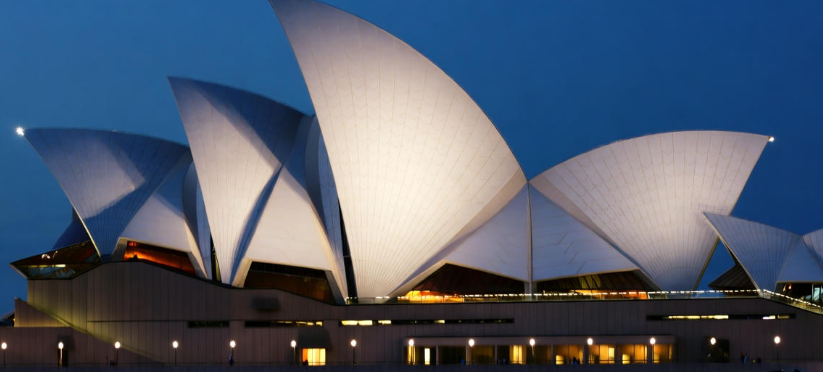
The Sydney Opera House is instantly recognizable thanks to its sail-like roof shells. Completed in 1973, it took 15 years of construction and over 10,000 workers to bring it to life. It’s not just a building; it’s a cultural hub hosting over 1,500 performances a year.
-
Architect: Jørn Utzon (Denmark)
-
Roof tiles: 1,056,000 tiles
-
Fun fact: The building weighs more than 2.1 million tonnes! 🎭
5. Colosseum – Rome, Italy
The Colosseum is a reminder of ancient Roman engineering genius. Built between 70–80 AD, it could hold up to 80,000 spectators for gladiatorial contests, animal hunts, and public spectacles. Its elliptical shape and complex underground structure showcase early architectural sophistication.
-
Original purpose: Gladiatorial games
-
Materials: Stone, concrete, tuff
-
Interesting note: It’s believed that the Colosseum could be emptied in just a few minutes thanks to its 80 entrances. 🏛️
6. Empire State Building – New York, USA
A symbol of American ambition and the skyline of New York, the Empire State Building was the tallest building in the world when it opened in 1931. Its Art Deco style is timeless, and it has appeared in countless films and TV shows.
-
Height: 443.2 meters (including antenna)
-
Floors: 102
-
Fun fact: It took just 1 year and 45 days to complete construction. 🗽
7. Sagrada Família – Barcelona, Spain
Antoni Gaudí’s masterpiece, the Sagrada Família, has been under construction since 1882. Its intricate façades, organic forms, and Gothic-Modernist blend make it unlike any other building. Even unfinished, it attracts millions of visitors every year.
-
Expected completion: 2026 (Gaudí’s 100th death anniversary)
-
Style: Modernisme (Catalan Art Nouveau)
-
Unique feature: Every column represents a tree, making the interior feel like a forest. 🌳
8. Leaning Tower of Pisa – Pisa, Italy
The Leaning Tower of Pisa is famous worldwide for its unintended tilt. Construction began in 1173, and due to unstable soil, the tower started leaning before completion. Efforts over the years have stabilized it, but its charm remains intact.
-
Height: 56 meters
-
Weight: ~14,500 tonnes
-
Fun fact: Galileo is said to have dropped two spheres from its top to study gravity. ⚖️
9. Petra – Jordan
Although technically a city carved into rocks, Petra’s Treasury building (Al-Khazneh) is an iconic representation of this ancient wonder. Dating back to 1st century AD, its rose-colored façade combines Hellenistic architectural elements with Nabataean ingenuity.
-
Entrance: Through the Siq, a 1.2 km canyon
-
UNESCO World Heritage Site: 1985
-
Interesting detail: Petra was unknown to the Western world until 1812. 🏺
10. Hagia Sophia – Istanbul, Turkey
Hagia Sophia has served as a cathedral, mosque, and now a museum. Built in 537 AD by Emperor Justinian I, it was the world’s largest cathedral for nearly 1,000 years. Its massive dome, mosaics, and minarets reflect a blend of Byzantine and Ottoman architecture.
-
Height: 55.6 meters
-
Dome diameter: 31 meters
-
Fun fact: It was the inspiration for many Ottoman mosques, including the Blue Mosque. 🕌
Comparison Table: Iconic Buildings At a Glance
| Building | Location | Height/Floors | Year Completed | Special Feature |
|---|---|---|---|---|
| Eiffel Tower | Paris, France | 324 m | 1889 | Iron lattice structure |
| Burj Khalifa | Dubai, UAE | 828 m / 163 | 2010 | Tallest in the world |
| Taj Mahal | Agra, India | 73 m | 1653 | White marble, symmetry |
| Sydney Opera House | Sydney, Australia | 65 m | 1973 | Sail-shaped roof |
| Colosseum | Rome, Italy | 48 m | 80 AD | Gladiatorial arena |
| Empire State Building | New York, USA | 443 m / 102 | 1931 | Art Deco style |
| Sagrada Família | Barcelona, Spain | 172 m | Under Construction | Tree-like columns |
| Leaning Tower of Pisa | Pisa, Italy | 56 m | 1372 | Tilted tower |
| Petra | Jordan | Carved rock | 1st century AD | Rose-colored façade |
| Hagia Sophia | Istanbul, Turkey | 55.6 m | 537 | Byzantine dome |
Why These Buildings Are Iconic
-
Cultural Significance: They represent their countries’ histories and traditions.
-
Architectural Innovation: From Gothic to modern skyscrapers, they show what humans can achieve.
-
Tourist Magnet: Millions visit each year, making them vital to local economies.
-
Symbolic Power: They inspire awe, tell stories, and sometimes define entire cities.
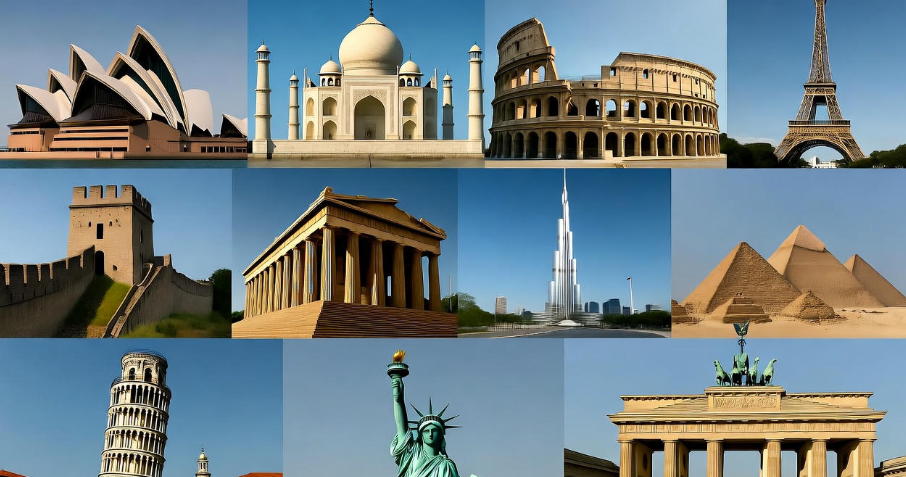
10 Most Iconic Buildings Around the World
FAQs about Iconic Buildings
Q1: Which is the oldest building on this list?
Hagia Sophia, built in 537 AD, is the oldest. It has survived earthquakes, wars, and multiple changes in religious use.
Q2: Which building took the longest to construct?
Sagrada Família, with construction starting in 1882 and expected completion in 2026, has been under construction for over 140 years!
Q3: Are all these buildings open to tourists?
Yes, all of them welcome visitors, though entry fees and restricted areas may apply for preservation purposes.
Q4: Which building is the tallest?
The Burj Khalifa in Dubai holds the record at 828 meters.
Q5: Why do people visit these buildings besides sightseeing?
Apart from tourism, people visit for architecture studies, photography, cultural experiences, and sometimes spiritual or historical connections.
Conclusion
These buildings are not just constructions—they are symbols of human creativity, ambition, and cultural identity. Whether ancient wonders like Petra and Hagia Sophia or modern marvels like Burj Khalifa, each tells a unique story. Visiting them is like stepping into a living history lesson, a lesson that blends art, engineering, and humanity. 🏛️✈️