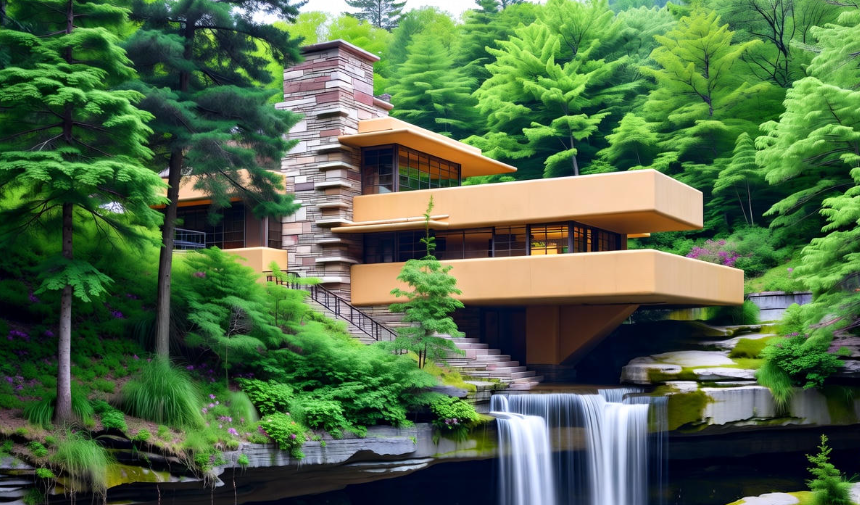

Fallingwater, located in Mill Run, Pennsylvania, is not just a house—it’s a masterpiece that merges nature, architecture, and human imagination into a single, breathtaking experience. Designed by the legendary architect Frank Lloyd Wright in 1935, Fallingwater is often hailed as the pinnacle of modern architectural design. But what makes it truly a “perfect architectural dream”? Let’s dive in.
Harmony with Nature 🌿
One of the first things you notice about Fallingwater is how seamlessly it blends into its natural surroundings. Unlike traditional homes that dominate their landscapes, Fallingwater respects the forest and the waterfall it sits upon. The house is literally built over a waterfall, allowing the sound of cascading water to fill the rooms.
-
Wright designed the house to integrate rocks and trees into its structure.
-
The terraces, windows, and overhangs follow the lines of the surrounding landscape.
-
Large windows provide a 360-degree view of the forest, making residents feel immersed in nature.
In short, Fallingwater doesn’t just sit on the land—it becomes part of the land. This connection to nature is a dream for any architect or homeowner seeking peace and inspiration.
Innovative Design and Structure 🏗️
Fallingwater is a marvel of engineering and architectural creativity. The house challenges conventional ideas of structure:
| Feature | Why It’s Unique |
|---|---|
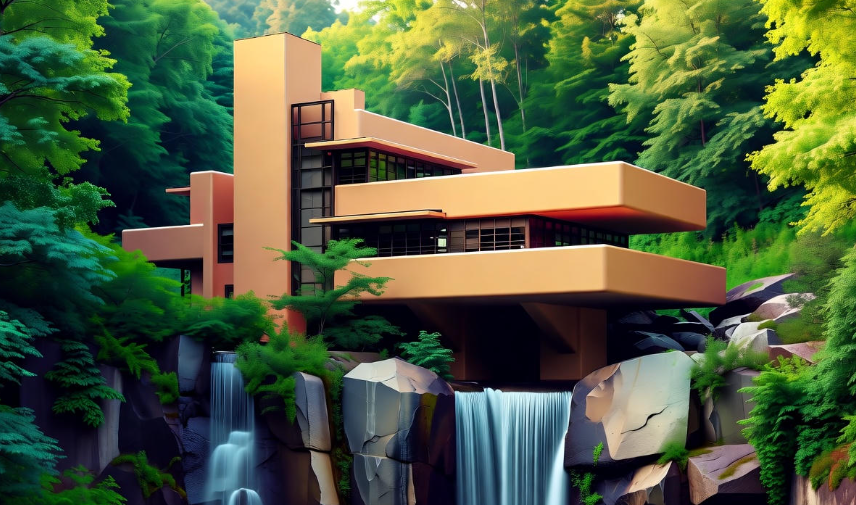
| Cantilevered terraces | These extend over the waterfall without visible supports, creating a floating effect. |
| Natural stone | Stones from the site were used for walls and floors, keeping the color and texture consistent. |
| Organic integration | The fireplace, a central element, sits atop a natural rock, blending indoor and outdoor elements. |
The design was risky at the time. Critics worried about the cantilevered terraces collapsing. But Wright’s precise calculations and innovative use of reinforced concrete made the design both safe and timeless.
Flowing Spaces and Interior Design 🛋️
Inside Fallingwater, there’s a sense of openness that feels very different from typical houses. Wright wanted spaces to flow naturally, allowing residents to move seamlessly from one area to another.
-
The living room extends over the waterfall, with terraces accessible from almost every room.
-
Natural light floods the interiors through wide windows and skylights.
-
Wright used built-in furniture to maintain harmony between the architecture and interior design.
This approach created a house that feels alive, almost like an extension of the forest itself. You don’t just live in Fallingwater—you experience it.
A Perfect Balance of Art and Function 🎨
Fallingwater is more than just beauty. Every design choice has a purpose:
-
The cantilevered terraces provide shade in the summer and sunlight in the winter.
-
The fireplace warms the living room efficiently while maintaining aesthetic appeal.
-
Materials like local stone and wood ensure the house is sustainable and blends with the environment.
It’s this balance of aesthetics and functionality that makes Fallingwater a dream for architects and homeowners alike.
Symbol of Modern Architecture 🏛️
Frank Lloyd Wright’s vision at Fallingwater influenced generations of architects. The house represents a shift from traditional European-style homes to something that honors its environment and expresses innovation.
Key elements of its architectural significance include:
-
Organic architecture: The philosophy that buildings should grow from their environment.
-
Rejection of ornamentation: Wright focused on clean lines and natural beauty rather than excessive decoration.
-
Integration of technology: Using concrete and steel to achieve daring structural feats.
Fallingwater is a textbook example of how architecture can be both daring and harmonious.
Emotional Impact and Experience ❤️
Beyond technical brilliance, Fallingwater evokes strong emotions. Standing on a terrace overlooking the waterfall, you feel connected to something bigger than yourself. The sound of water, the scent of pine, and the panoramic views create a sensory experience that most houses can’t match.
It’s this emotional resonance—this ability to move people—that makes Fallingwater more than just a building. It’s a living, breathing work of art.
Recognition and Legacy 🏅
Fallingwater has received worldwide recognition for its design excellence:
-
It’s listed as a National Historic Landmark in the United States.
-
UNESCO named it a World Heritage Site.
-
It regularly appears in lists of the most important architectural achievements of the 20th century.
These accolades are not just about fame—they reflect the house’s enduring influence on architecture and design philosophy.
Challenges in Creating the Dream 🛠️
Even though Fallingwater looks effortless, it wasn’t easy to bring it to life. Wright faced many challenges:
-
Engineering difficulties: Cantilevers were difficult to construct safely.
-
Budget constraints: Using local stone and custom designs made it expensive.
-
Skepticism from clients and engineers: Many doubted the feasibility of the design.
Yet, through vision, creativity, and determination, Wright overcame all obstacles. Today, the house stands as a testament to ambition and innovation.
Visitors’ Experience and Connection 🌎
Fallingwater is open to the public for tours, allowing people to experience its genius firsthand. Visitors often note:
-
The sound of the waterfall inside the living space is mesmerizing.
-
Walking along the terraces feels like stepping into a painting.
-
The house’s integration with nature makes you reflect on how humans can live in harmony with the environment.
It’s no wonder Fallingwater continues to inspire architects, designers, and dreamers around the world.
Tables of Unique Features
| Feature | Why It’s a Dream |
|---|---|
| Cantilevered decks | Feel like floating over a waterfall. |
| Local stone use | Blends seamlessly with nature. |
| Open floor plan | Enhances freedom and connection to outdoors. |
| Built-in furniture | Reduces clutter and preserves harmony. |
| Natural lighting | Creates warmth and energy efficiency. |
Why Fallingwater Is a Perfect Architectural Dream
If we summarize, Fallingwater is called a perfect architectural dream because:
-
It integrates nature and architecture flawlessly.
-
It challenges engineering norms with innovative design.
-
Interiors are fluid and human-centric, enhancing comfort and connection.
-
Every feature balances art and function.
-
It inspires emotional and spiritual resonance.
-
It has set the benchmark for modern architecture.
Fallingwater is not just a house. It’s a symbol of vision, creativity, and harmony. Anyone who steps inside can understand why it remains timeless, admired, and profoundly inspiring.
FAQs about Fallingwater
Q: Who designed Fallingwater?
A: Frank Lloyd Wright designed Fallingwater in 1935.
Q: Why is it called Fallingwater?
A: The house is built over a natural waterfall, which gives it the name “Fallingwater.”
Q: Where is Fallingwater located?
A: Mill Run, Pennsylvania, USA.
Q: Can the public visit Fallingwater?
A: Yes, Fallingwater is open for tours throughout the year.
Q: What makes Fallingwater unique compared to other houses?
A: Its seamless integration with nature, cantilevered terraces, open interior spaces, and organic architecture make it one of a kind.
Q: How has Fallingwater influenced modern architecture?
A: Fallingwater popularized organic architecture, inspiring architects to design buildings in harmony with nature rather than against it.
Q: Is Fallingwater safe to live in today?
A: While it’s structurally sound, Fallingwater is primarily preserved as a historic landmark and museum.
Fallingwater is more than a dream—it’s an architectural poem in stone, concrete, and water. Every angle, every line, every sound has been meticulously thought out. Frank Lloyd Wright didn’t just build a house; he created a timeless experience, one that continues to inspire and captivate the world. 🌟