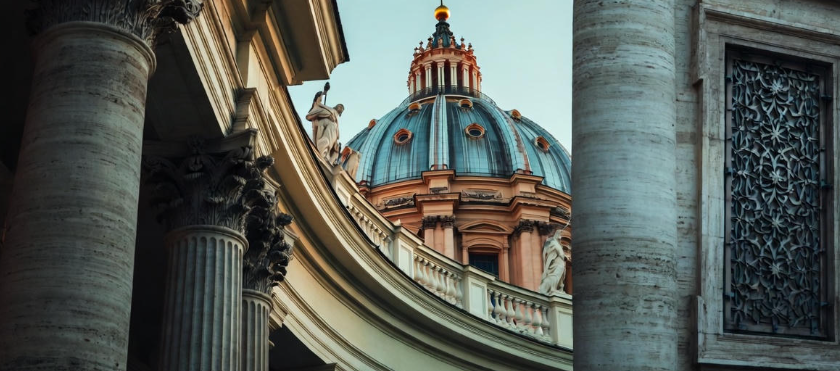

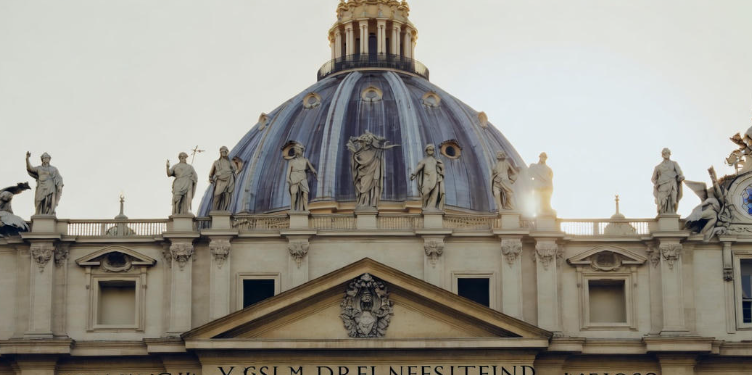
Vatican City isn’t just the world’s smallest country; it’s a treasure trove of architectural marvels that blend art, history, and spirituality. While many are familiar with its iconic landmarks like St. Peter’s Basilica and the Sistine Chapel, there are hidden design secrets that make this city-state a masterpiece in itself. Let’s uncover some of these lesser-known architectural gems.
1. The Enigmatic Bramante Staircase
Most visitors to the Vatican Museums are unaware of the original Bramante Staircase, built in 1505 by Donato Bramante. Unlike the modern spiral staircase many photograph, this original design was a wide, sloped ramp encased in a tower, allowing horses and carts to ascend and descend with ease. This ingenious design reflects the Renaissance-era ingenuity of the Vatican’s architects. Wikipedia
2. The Hidden Vatican Necropolis
Beneath the grandeur of St. Peter’s Basilica lies the Vatican Necropolis, an ancient Roman-era burial ground believed to house the tomb of Saint Peter himself. Access to this sacred site is limited, with only a small number of visitors allowed each day through special guided tours. Walking through its narrow corridors offers a glimpse into early Christian history and the origins of the Vatican. Discovery Guided Tours
3. The Clementine Chapel: A Sanctuary Few Ever See
Tucked away in the Vatican Grottoes is the Clementine Chapel, one of the oldest and most spiritually significant chapels in the Vatican. Adorned with ornate mosaics and golden reliefs, this chapel is near the supposed burial site of Saint Peter. Its location and restricted access make it one of the Vatican’s best-kept secrets, offering a profound connection to the roots of the Church. Discovery Guided Tours
4. The Vatican Gardens: Nature in the Heart of the City
Behind the thick Vatican walls lies a peaceful expanse of greenery—the Vatican Gardens. Covering nearly half of Vatican City, this oasis is home to Renaissance fountains, hidden shrines, and beautifully maintained botanical paths. Most visitors never get a glimpse of these gardens, which are only accessible via special itineraries. A walk through this space reveals layers of symbolism, history, and serenity. Discovery Guided Tours
5. The Mosaic Studio: Art in Motion
Inside the Vatican, a team of artisans quietly preserves the centuries-old tradition of mosaic art. The Vatican Mosaic Studio is responsible for creating and restoring the masterpieces that decorate not only St. Peter’s Basilica but many other churches and papal residences. Specialized tours sometimes offer access, allowing you to witness artists at work using ancient techniques to replicate Renaissance and Baroque masterpieces. Discovery Guided Tours
6. The Scala Regia: A Grand Entrance
Designed by Gian Lorenzo Bernini, the Scala Regia is the official entrance to the Apostolic Palace. This grand staircase leads up to the Sala Regia, which connects to the Sistine Chapel and the Pauline Chapel. Its design reflects the grandeur and solemnity of the papal residence, serving as a fitting prelude to the sacred spaces within. Wikipedia
7. The Gregorian Tower: An Astronomical Marvel
Built between 1578 and 1580, the Gregorian Tower was constructed to promote the study of astronomy for the Gregorian Calendar Reform commissioned by Pope Gregory XIII. Also known as the Tower of Winds, it served as an early modern observatory and is a testament to the Vatican’s commitment to scientific advancement during the Renaissance. Wikipedia
8. The Porta San Pellegrino: A Historic Gateway
The Porta San Pellegrino is a gate in the outer wall of Vatican City, located beside Bernini’s Colonnade. Rebuilt by Pope Alexander VI in 1492, the gate is surmounted by his papal coat of arms. Once a principal northern entrance for pilgrims, it now stands almost hidden beneath the buildings of the Apostolic Palace, serving as a silent witness to the Vatican’s rich history. Wikipedia
9. The St. Peter’s Baldachin: A Monumental Canopy
At the center of St. Peter’s Basilica stands the St. Peter’s Baldachin, a large Baroque sculpted bronze canopy designed by Gian Lorenzo Bernini. Standing 28.74 meters tall, it marks the place of Saint Peter’s tomb beneath. This monumental structure not only serves as a focal point within the basilica but also symbolizes the Church’s connection to its foundational roots. Wikipedia
10. The Acoustics of St. Peter’s Basilica: A Symphony of Sound
The acoustics of St. Peter’s Basilica are nothing short of remarkable. Its high ceilings, vast interior space, and marble walls form a unique soundscape that enhances liturgical music and chants. The architects carefully considered acoustics in their design to ensure every note resonates clearly, adding another dimension to the deeply spiritual atmosphere of the basilica. voxcity.com
FAQs
Q: How can I visit the Vatican Necropolis?
A: Access to the Vatican Necropolis is limited and requires booking a special guided tour in advance.
Q: Are the Vatican Gardens open to the public?
A: The Vatican Gardens are not open to the general public but can be visited through special guided tours.
Q: Can I see the original Bramante Staircase?
A: The original Bramante Staircase is not open to the public, but its design can be appreciated through specialized tours.
Q: Is photography allowed in the Vatican Necropolis?
A: Photography is strictly prohibited in the Vatican Necropolis to preserve its sanctity and historical integrity.
Q: How can I learn more about the hidden architectural gems of the Vatican?
A: Joining a specialized guided tour is the best way to explore and learn about the lesser-known architectural wonders of the Vatican.