
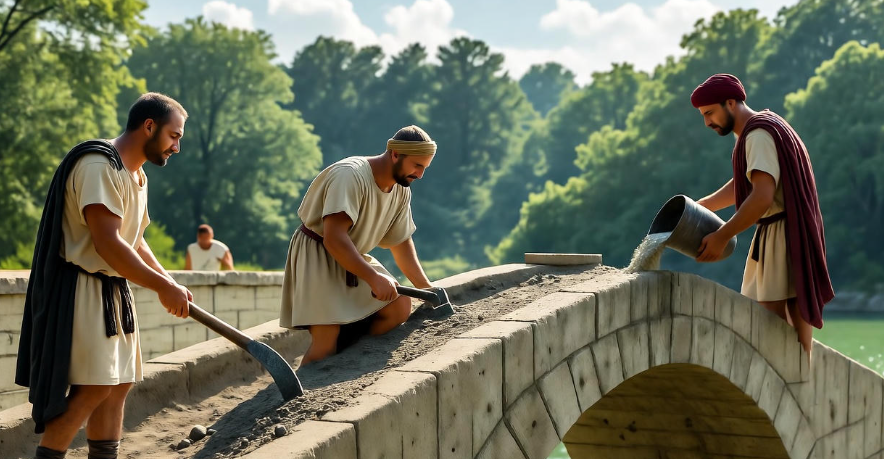

Concrete is the backbone of modern infrastructure, but did you know that the Romans were using concrete over 2,000 years ago? Their version was so durable that many of their structures still stand today. Let’s explore how they achieved this remarkable feat.
The Ingredients of Roman Concrete
Roman concrete, known as opus caementicium, was a mix of:
-
Lime: The primary binder.
-
Pozzolana: A type of volcanic ash.
-
Water: To activate the mix.
-
Aggregate: Materials like stones or bricks.
This combination created a strong and versatile material that could set underwater, making it ideal for harbors and aqueducts HISTORY.
The Role of Volcanic Ash
The secret behind Roman concrete’s longevity lies in its use of volcanic ash, particularly from the Bay of Naples. When mixed with lime and water, this ash formed a chemical bond that made the concrete resistant to cracking and environmental wear 99% Invisible.
Hot Mixing: A Revolutionary Technique
Romans employed a method called “hot mixing,” where quicklime was mixed with dry pozzolana and water added just before use. This process generated heat, accelerating the chemical reactions and leading to the formation of lime clasts—tiny white particles that gave the concrete self-healing properties. When cracks formed, these lime clasts would react with water to fill the gaps, maintaining the structure’s integrity The Lab – Brookes Bell.
Durability in Seawater
One of the most impressive aspects of Roman concrete is its performance in seawater. Unlike modern concrete, which deteriorates in salty environments, Roman concrete actually becomes stronger over time. The interaction between seawater and the volcanic ash produces minerals like tobermorite and phillipsite, which reinforce the concrete and prevent cracks from spreading WIRED.
Innovative Construction Techniques
Romans didn’t just mix materials; they also developed advanced construction methods:
-
Opus Incertum: Using irregular stones in a concrete core.
-
Opus Reticulatum: A more refined technique with diamond-shaped stones.
-
Opus Testaceum: Bricks set in a concrete matrix.
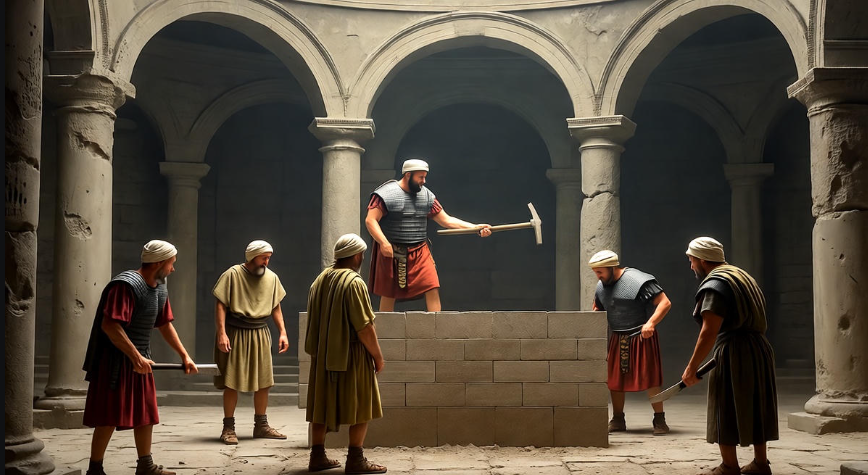
These methods allowed for the creation of complex and durable structures Wikipedia.
Legacy and Modern Applications
The durability of Roman concrete has inspired modern engineers. Researchers are studying ancient recipes to develop more sustainable and long-lasting materials for today’s construction needs. By understanding and applying these ancient techniques, we can build infrastructure that stands the test of time ASME.
FAQs
Q1: Why did Roman concrete last so long?
A1: Its unique mix of volcanic ash, lime, and water, combined with advanced construction techniques, made it exceptionally durable.
Q2: Can we replicate Roman concrete today?
A2: Yes, researchers are studying ancient methods to recreate this durable material for modern use.
Q3: Were Romans the first to use concrete?
A3: While other civilizations used forms of concrete, the Romans perfected and widely implemented it in their architecture.
Conclusion
The ancient Romans were pioneers in concrete construction. Their innovative use of materials and techniques resulted in structures that have withstood centuries of wear and tear. By studying and applying their methods, we can build a more durable and sustainable future.