
Introduction
When we look at medieval castles today, many of them still stand tall after 500, 600, or even 1,000 years. 🏰 It’s almost magical when you think about it. How did people in the Middle Ages, with no modern machinery or technology, build such structures that have lasted centuries? The secret lies in clever design, strong materials, and strategic planning. Let’s take a closer look at how these incredible fortresses were built to endure the test of time.
The Importance of Location
The very first step in building a castle was choosing the perfect location. Builders didn’t just pick a spot randomly. Hills, cliffs, and river bends were favorites because they naturally made the castle harder to attack. 🌄 A high location gave defenders a clear view of approaching enemies, and rivers or moats added an extra layer of protection.
Strong Foundations
No castle could survive without a solid foundation. Builders often dug deep into the bedrock to create a base that could handle the enormous weight of stone walls. In softer areas, they would lay huge wooden beams or pack the ground with gravel and stones to prevent sinking. This was centuries before engineers had fancy machines, so it was all about smart labor and human ingenuity.
Stone Selection and Masonry
One of the reasons castles last so long is the type of stone used. Hard stones like granite, limestone, and sandstone were common because they resist weathering. Builders also cut stones carefully to fit snugly, often without any mortar, in a technique called dry stone masonry. 🪨 Mortar, when used, was made from lime and sand, which could even strengthen over time with exposure to air.
Walls and Thickness
Medieval castles are famous for their massive walls. These weren’t just for show—they were practical. Walls could be 10 to 30 feet thick in some places! Such thickness helped withstand attacks from battering rams and even early cannons in later centuries. Some walls were even hollowed out to create passageways, storage rooms, or traps for attackers.
Towers and Keeps
The central tower, or keep, was the strongest part of the castle. It often had the thickest walls and the fewest windows. Keeps served as the last line of defense and as the lord’s living quarters. 🏰 Towers were also used for lookout points, archery posts, and to drop stones or boiling liquids on attackers. Their circular shape was especially smart—it made them harder to destroy with battering rams because there were no flat surfaces for impact.
Defensive Design
Castles were built like giant puzzles for attackers. Multiple layers of walls, called concentric castles, created several defensive rings. Arrow slits were narrow openings allowing archers to shoot while staying safe. Murder holes in ceilings let defenders pour boiling water, oil, or rocks on invaders. Even gates were fortified with heavy wooden doors, iron spikes, and sometimes a portcullis, a metal gate that could drop quickly in emergencies. ⚔️
Roofs and Drainage Systems
Many people forget that castles needed to survive rain and snow too. Sloped roofs and stone gutters directed water away from the walls. Towers often had conical roofs that not only looked majestic but also prevented water damage. Proper drainage meant the walls didn’t weaken over decades due to water erosion.
Human Labor and Organization
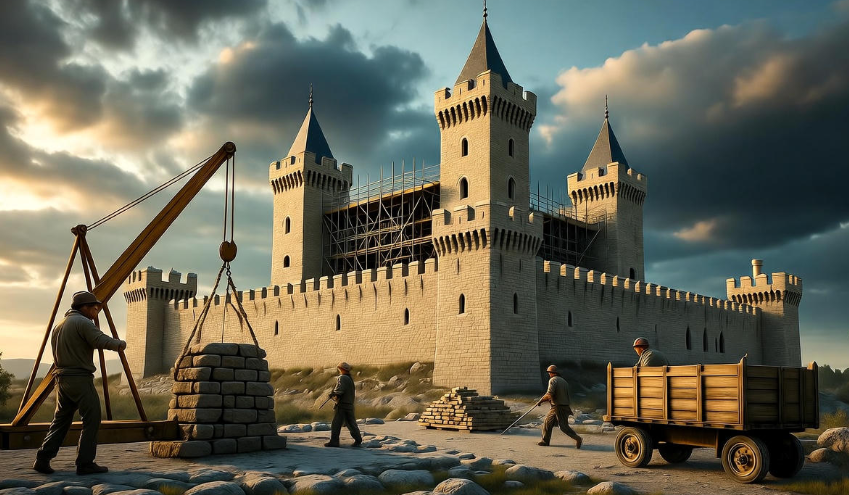
Building a castle was not a small task. Hundreds of workers—stonemasons, carpenters, blacksmiths, and laborers—worked together, often for decades. The process required careful organization. Quarrying stone, transporting it, shaping it, and assembling walls took years. Some castles took 20–50 years to complete. And the work didn’t stop there; maintenance was continuous. 🛠️
Use of Wood and Metal
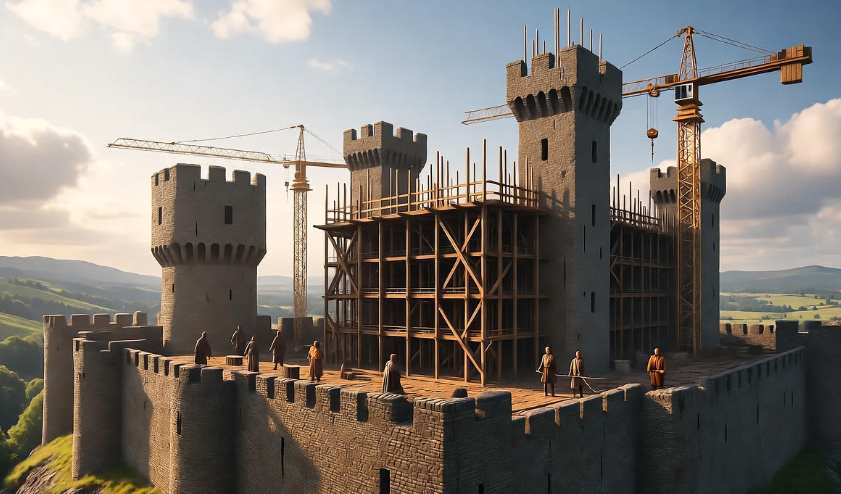
While stone was the main material, wood and metal played critical roles. Wooden scaffolding allowed builders to reach higher walls safely. Metal nails, hinges, and braces strengthened doors and portcullises. Even the drawbridges relied on a combination of wood and iron to function reliably for centuries.
Adaptation to Technology
Castles weren’t static; they evolved over time. As new weapons like cannons appeared, walls were thickened, and bastions were added. Architects learned from each siege and updated designs to make castles even more durable. This adaptability helped many castles survive not just centuries but repeated attacks.
Weathering the Test of Time
Even today, centuries-old castles show signs of wear, yet they stand because of the materials, design, and sheer engineering genius of medieval builders. The combination of stone strength, careful design, and strategic location created fortresses that could withstand time itself. 🌟
Table: Key Factors That Made Castles Last
| Feature | Purpose/Benefit |
|---|---|
| Hilltop location | Defense & visibility |
| Thick stone walls | Protection from attacks & weathering |
| Strong foundations | Stability & weight support |
| Circular towers | Better defense & structural strength |
| Arrow slits & murder holes | Attacking defense without exposing defenders |
| Sloped roofs & gutters | Water drainage & wall preservation |
| Durable materials | Longevity (granite, limestone, iron) |
| Concentric design | Multiple layers of defense |
FAQs
Q: Why did some castles survive while others didn’t?
A: Survival often depended on location, quality of materials, and maintenance. Castles built on solid rock with thick walls and continuous upkeep lasted longer.
Q: Were castles only for defense?
A: Not entirely. Castles were also homes for lords and centers of administration. But defense was always a major design priority.
Q: How long did it take to build a medieval castle?
A: Depending on size, a castle could take 20–50 years to complete. Some massive structures were built over multiple generations.
Q: Did castles last because of magic or superstition?
A: 😊 No magic involved—just brilliant engineering, careful planning, and durable materials.
Q: Can modern engineers learn from medieval castles?
A: Absolutely! Concepts like load distribution, natural defense, and sustainable materials are still relevant today.
Conclusion
Medieval castles are more than stone walls—they are a testament to human creativity, patience, and ingenuity. Every hilltop keep, circular tower, and arrow slit tells a story of people who wanted their homes and strongholds to last. Centuries later, these castles still inspire awe, reminding us that with smart design and perseverance, even ordinary materials can create something extraordinary.