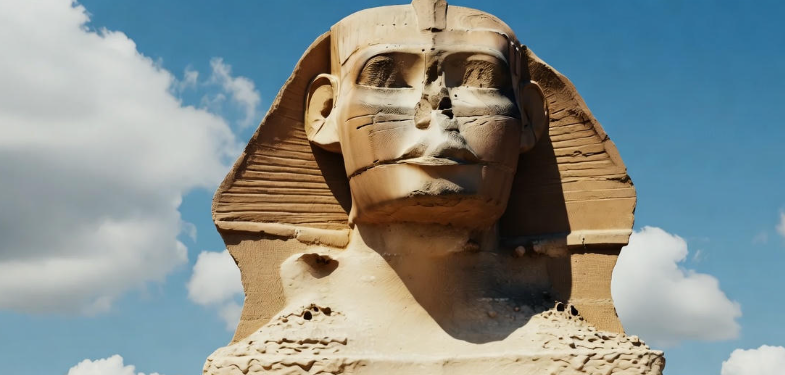

The Great Sphinx of Giza, with its majestic lion’s body and human head, stands as one of the most iconic symbols of ancient Egypt. Carved from a single limestone mass, this colossal statue has intrigued historians, archaeologists, and visitors for centuries. Let’s delve into the secrets behind its enduring design.
Monolithic Masterpiece
Unlike many ancient structures assembled from multiple stones, the Sphinx was carved from a single piece of limestone. This monolithic approach not only showcases the advanced engineering skills of ancient Egyptians but also contributes to the statue’s longevity and resilience. Standing approximately 66 feet tall and 240 feet long, the Sphinx’s sheer size and unity in design are remarkable.
Symbolism of the Lion’s Body
The lion’s body represents strength, courage, and protection. In ancient Egyptian culture, the lion was a symbol of power and guardianship. By combining the lion’s form with a human head, the Sphinx embodies the fusion of physical prowess and intellectual authority, signifying the ruler’s role as both a warrior and a wise leader.
The Human Head: A Pharaoh’s Likeness
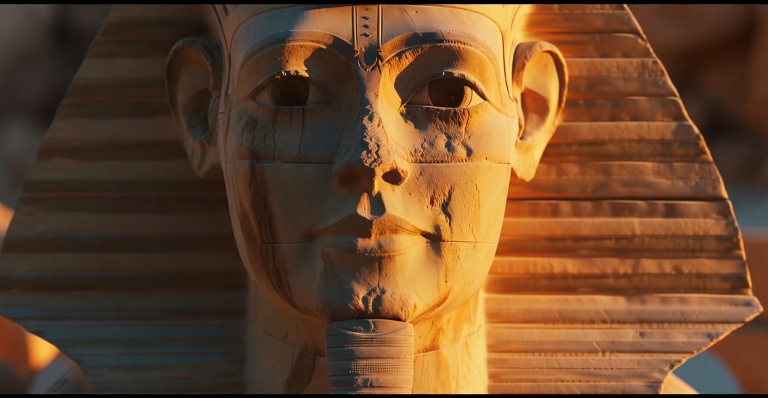
The human head of the Sphinx is believed to represent Pharaoh Khafre, who reigned during the Fourth Dynasty of the Old Kingdom. The facial features and royal headdress are consistent with depictions of Khafre found in other monuments. This connection underscores the Sphinx’s role as a guardian of the pharaoh’s tomb and a symbol of his divine authority.
Alignment with the Sun
The Sphinx faces east, aligning with the rising sun. This orientation is significant in ancient Egyptian cosmology, where the sun god Ra was associated with creation and rebirth. By positioning the Sphinx to face the sunrise, it symbolizes the pharaoh’s connection to Ra and the eternal cycle of life and death.
Carving Techniques
Creating the Sphinx would have been a monumental task. Archaeologists estimate that a team of about 100 workers, using copper chisels and hammers, would have taken approximately three years to carve the statue. The precision and skill required to shape such a massive structure from a single limestone outcrop highlight the advanced craftsmanship of ancient Egyptian builders.
Pigmentation and Original Appearance
Evidence suggests that the Sphinx was originally painted in vibrant colors. Pigment residue found on the statue indicates that it once displayed hues that would have made it even more striking against the desert backdrop. Over time, these colors have faded, but traces remain, offering a glimpse into the Sphinx’s original appearance.
The Dream Stele
Between the paws of the Sphinx stands the Dream Stele, erected by Pharaoh Thutmose IV. The stele recounts a dream in which the Sphinx spoke to Thutmose IV, promising him kingship if he cleared the sand that buried it. This narrative not only adds a layer of mystique to the Sphinx but also emphasizes its significance in legitimizing royal authority.
Erosion Patterns and Preservation
The Sphinx has withstood the test of time, but not without signs of wear. Erosion patterns on the statue’s surface suggest that it has endured centuries of wind and sand exposure. Modern conservation efforts aim to preserve this ancient wonder, ensuring that future generations can continue to marvel at its grandeur.
Cultural and Religious Significance
Beyond its architectural marvel, the Sphinx holds deep cultural and religious significance. It embodies the ancient Egyptians’ reverence for the divine and their belief in the afterlife. As a guardian of the pyramids and tombs, the Sphinx symbolizes the protection of sacred spaces and the continuity of the pharaoh’s spirit.
Modern Interpretations
In contemporary times, the Sphinx continues to inspire awe and curiosity. Its enduring design serves as a testament to the ingenuity and vision of ancient Egyptian civilization. Scholars and enthusiasts alike continue to study and interpret the Sphinx, seeking to uncover more about its origins and purpose.
Conclusion
The Great Sphinx of Giza stands as a monumental testament to ancient Egyptian artistry, engineering, and spirituality. Its enduring design, rich symbolism, and historical significance continue to captivate the imagination of people around the world. As we continue to explore and understand its mysteries, the Sphinx remains a powerful symbol of the enduring legacy of ancient Egypt.
FAQs
Q1: Who built the Great Sphinx of Giza?
The Great Sphinx is traditionally attributed to Pharaoh Khafre, who reigned during the Fourth Dynasty of the Old Kingdom.
Q2: What does the Sphinx represent?
The Sphinx combines the body of a lion, symbolizing strength and protection, with the head of a pharaoh, representing wisdom and authority.
Q3: Why does the Sphinx face east?
The Sphinx faces east to align with the rising sun, symbolizing the pharaoh’s connection to the sun god Ra and the cycle of rebirth.
Q4: How was the Sphinx carved?
The Sphinx was carved from a single limestone outcrop using copper chisels and hammers, a process that likely took about three years.
Q5: What is the Dream Stele?
The Dream Stele is a granite slab erected between the Sphinx’s paws by Pharaoh Thutmose IV, recounting a dream in which the Sphinx spoke to him.
Q6: Has the Sphinx always looked the same?
No, the Sphinx was originally painted in vibrant colors, but over time, these pigments have faded due to exposure to the elements.
Q7: What threats does the Sphinx face today?
The Sphinx faces threats from environmental erosion, pollution, and urban development, prompting ongoing conservation efforts.
Q8: Is there a temple associated with the Sphinx?
Yes, the Sphinx is linked to the Sphinx Temple, which is believed to have been part of a larger funerary complex associated with Pharaoh Khafre.
Q9: Can visitors approach the Sphinx?
Yes, visitors can approach the Sphinx, but access may be restricted during certain times for preservation and security reasons.
Q10: What mysteries still surround the Sphinx?
While much has been uncovered, mysteries remain regarding the exact purpose of the Sphinx and the full extent of its original design and symbolism.