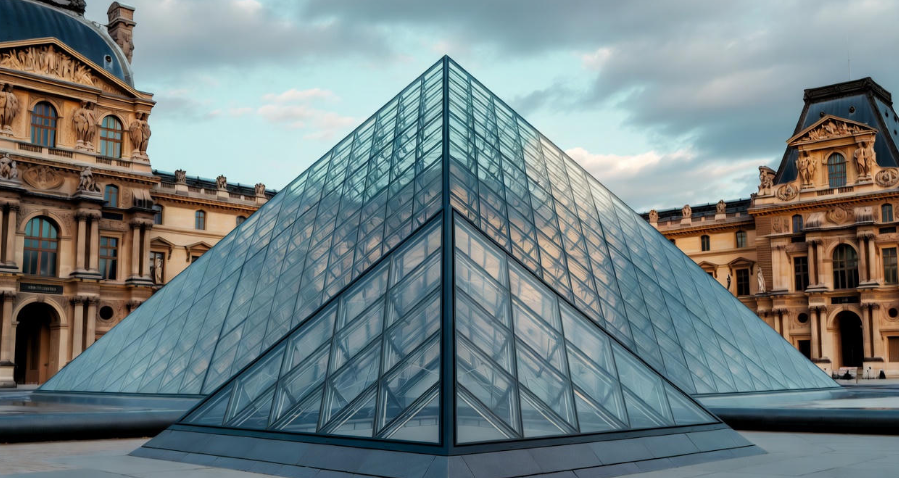

The Louvre Pyramid is one of those rare structures that instantly grabs your attention. Nestled in the heart of Paris, it stands at the main courtyard of the Louvre Museum, bridging the gap between centuries of history and contemporary design. Imagine stepping into a place that feels both ancient and modern at the same time—it’s like walking through a doorway where time folds onto itself. 🌟
A Bold Idea by I. M. Pei
The pyramid was designed by Chinese-American architect Ieoh Ming Pei, commonly known as I. M. Pei. When it was first announced in 1984, the design sparked heated debates. People wondered, “How could a sleek, glass pyramid fit into the centuries-old Louvre?” Pei envisioned a structure that would complement the Louvre rather than overshadow it. The pyramid was intended not only as a striking visual element but also as a practical entrance to the museum, improving the flow of visitors.
Glass and Metal: A Delicate Balance
The pyramid is made up of 673 glass panes—carefully chosen to create a sense of transparency without reflecting too much sunlight. Fun fact: despite rumors, there aren’t 666 panes as some urban myths suggest! The combination of glass and metal allows sunlight to pour into the underground lobby, creating a bright, welcoming space that contrasts beautifully with the traditional stone architecture above.
Bridging Old and New
What makes the Louvre Pyramid remarkable is its dialogue between eras. On one side, you have the grandeur of the Renaissance palace; on the other, the minimalist, geometric glass structure. This juxtaposition creates an artistic tension that’s fascinating to observe. Visitors often pause, not just to admire the pyramid but to reflect on how architecture can tell a story across centuries.
Practical Design Meets Aesthetic Appeal
One of Pei’s key goals was functionality. The pyramid serves as the main entrance to the museum, guiding thousands of visitors through a central hub. Underground, visitors find a spacious lobby connecting to three wings of the museum: Denon, Sully, and Richelieu. The design efficiently handles visitor flow while offering cafes, gift shops, and ticket counters. It’s a perfect example of form meeting function.
Symbolism in Simplicity
Beyond practicality, the pyramid carries symbolic weight. The pyramid, historically, represents stability and eternal life. By placing it at the Louvre, Pei subtly links the museum’s mission—preserving art through time—to a timeless geometric shape. The transparency of the glass can be seen as a metaphor for openness, inviting everyone into a world of knowledge and beauty. 🖼️
The Public Reaction: Controversy to Admiration
When the pyramid opened in 1989, the reaction was mixed. Critics labeled it “too modern” for the historic setting. Yet, over time, it has become one of Paris’s most iconic landmarks. Today, it is photographed more than many of the Louvre’s classical masterpieces. People travel from all over the world, not just to see the museum’s art, but to experience this unique architectural marvel.
Engineering Marvels Behind the Glass
Creating a transparent structure of this scale is no small feat. The pyramid’s metal framework is engineered to support the glass without obstructing the view. Each pane was carefully cut and installed to ensure safety and visual harmony. The construction combined traditional craftsmanship with modern engineering techniques, making it a model of innovation and precision.
Cultural Impact and Tourism
The Louvre Pyramid has transcended its role as a museum entrance. It has appeared in countless films, advertisements, and social media posts. Its image has become synonymous with Paris, often standing alongside the Eiffel Tower as a symbol of the city’s blend of history and modernity. Tourism around the Louvre has increased significantly, and the pyramid itself is now a must-see attraction, often overshadowing even the museum’s famous artworks for first-time visitors.
Interesting Table: Louvre Pyramid Facts
| Feature | Detail |
|---|---|
| Architect | I. M. Pei |
| Opened | 1989 |
| Glass Panes | 673 |
| Height | 21.6 meters |
| Base Length | 35.4 meters |
| Material | Glass and Metal |
| Function | Main museum entrance, underground lobby |
| Location | Cour Napoléon, Louvre Museum, Paris |
Why the Louvre Pyramid Still Matters Today
Even decades after its construction, the pyramid continues to inspire architects and artists worldwide. It demonstrates that bold design choices, when executed thoughtfully, can enhance historical spaces rather than detract from them. It’s also a reminder that architecture is about storytelling—the Louvre Pyramid tells the story of Paris itself: a city where past and present coexist beautifully.
Visitor Experience Tips
-
Timing: Visit early in the morning or late afternoon to capture the best light for photos. 🌅
-
Perspective: Walk around the pyramid; each angle tells a slightly different story.
-
Interactive Experience: Don’t just look from outside. Descend into the underground lobby and feel how the sunlight transforms the space.
-
Guided Tours: Consider a tour to understand Pei’s design philosophy and the engineering behind it.
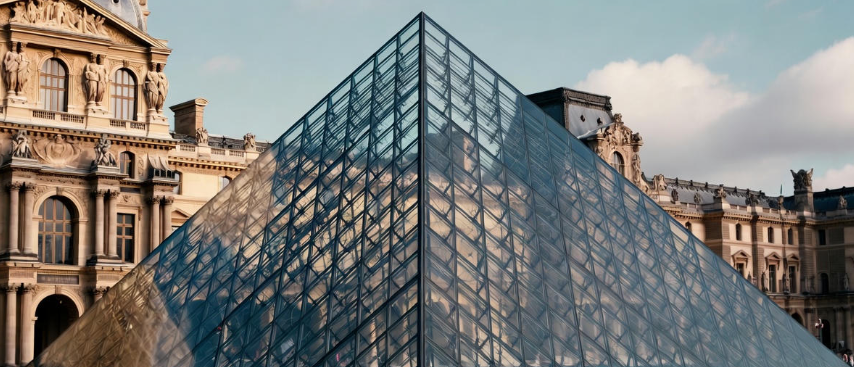
The Louvre Pyramid: A Modern Icon in a Historic Landscape
FAQs
Q1: Why is the Louvre Pyramid made of glass?
A: Glass allows natural light to enter the underground lobby, creating a bright, open space. It also symbolizes transparency and openness.
Q2: Was the pyramid controversial when built?
A: Yes. Critics initially thought it clashed with the historic Louvre. Today, it is celebrated as an iconic Paris landmark.
Q3: Who designed the Louvre Pyramid?
A: Chinese-American architect I. M. Pei.
Q4: How many glass panes are in the pyramid?
A: 673 panes, carefully arranged to create a seamless appearance.
Q5: Can visitors go inside the pyramid?
A: Absolutely! The pyramid leads to the main underground lobby, connecting the museum’s three wings.
Q6: What does the pyramid symbolize?
A: Pyramids historically symbolize stability and eternal life. In this context, it represents the timelessness of art and knowledge.
Conclusion: A Modern Gem in a Historical Treasure
The Louvre Pyramid proves that modern architecture can coexist with history in a harmonious, meaningful way. It’s not just a functional entrance—it’s a symbol of Paris itself: elegant, innovative, and timeless. Next time you visit, take a moment to pause, look up at the glass reflecting the sky, and imagine the centuries of history beneath your feet. That’s the magic of the Louvre Pyramid—where glass meets history, and the past meets the present. ✨