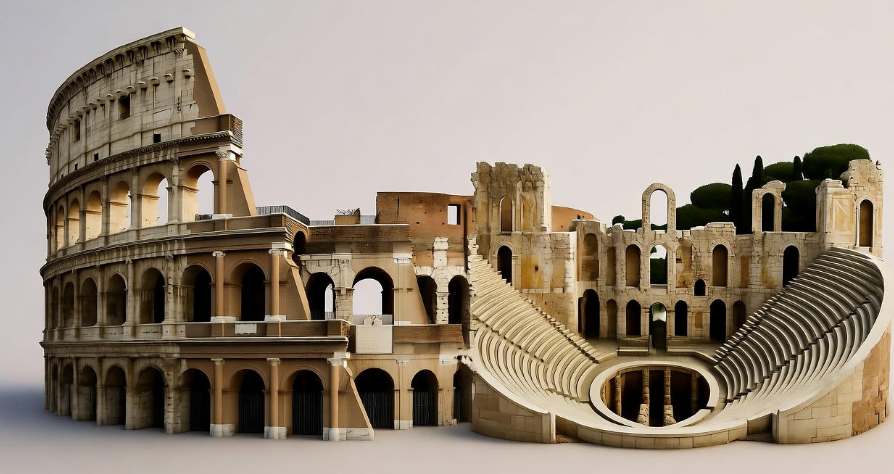

When we think about ancient Rome, we often imagine grand amphitheaters, mighty emperors, and bustling streets. But one of the greatest achievements of the Romans wasn’t just their politics or their architecture—it was their aqueducts. These incredible water systems weren’t only functional; they were a testament to Roman engineering genius. 💧
What Roman Aqueducts Are
Roman aqueducts were structures built to carry water from distant sources into cities and towns. Unlike simple canals, aqueducts often spanned valleys, rivers, and rough terrains using a combination of tunnels, bridges, and arches. They provided clean water for drinking, bathing, irrigation, and even public fountains.
Romans understood the importance of water in urban life. They knew that a city could not grow or thrive without a steady water supply. That’s why aqueducts were not just pipes—they were lifelines.
Engineering Principles Behind Aqueducts
The brilliance of Roman aqueducts lies in their simple yet effective engineering principles:
-
Gravity Flow – Water always flowed downward, following a slight, consistent slope. Engineers calculated these slopes precisely, sometimes over dozens of kilometers, to ensure water would flow steadily without stagnating or rushing too fast.
-
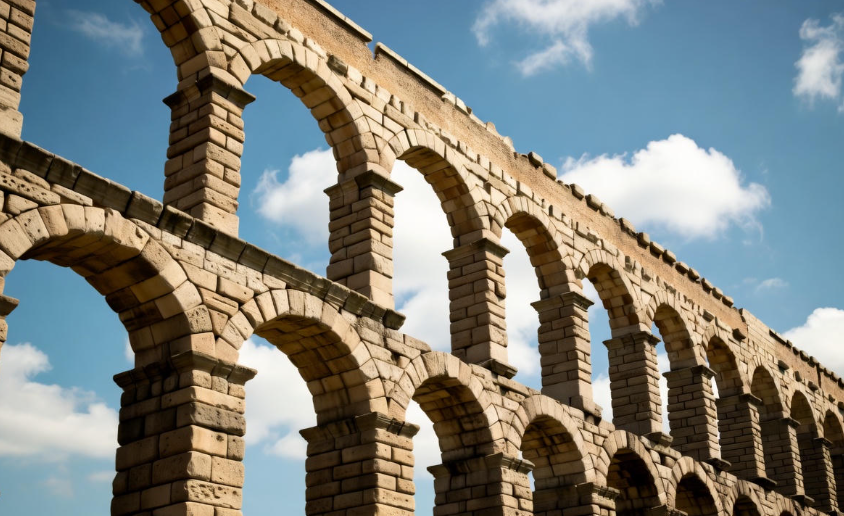
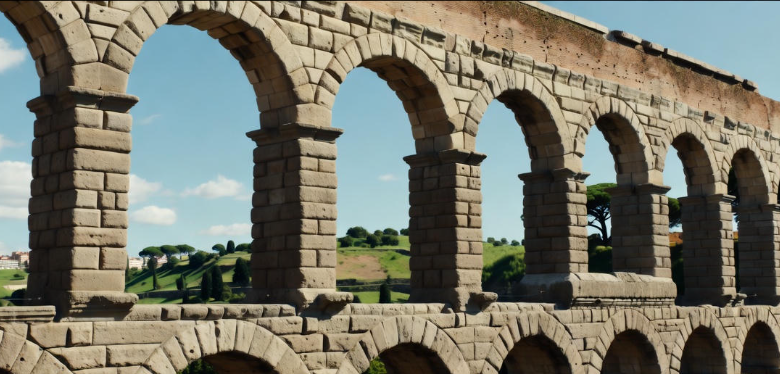
Arch Construction – Many aqueducts crossed valleys. To keep water flowing above ground, Romans built arches. These arches distributed weight efficiently, allowing long structures without collapsing. 🏛️
-
Durable Materials – Romans used concrete, stone, and waterproof cement called opus caementicium. This allowed aqueducts to last centuries. Even today, parts of aqueducts like the Pont du Gard in France remain intact.
-
Maintenance Access – Engineers built inspection shafts and tunnels along aqueducts, so workers could clean and repair them. This ensured the system ran smoothly over time.
Famous Roman Aqueducts
Several aqueducts stood out in the Roman Empire:
| Aqueduct Name | Location | Length | Key Feature |
|---|---|---|---|
| Aqua Appia | Rome | 16.4 km | Rome’s first aqueduct, mostly underground |
| Aqua Claudia | Rome | 69 km | Known for towering arches and long tunnels |
| Pont du Gard | France | 50 km | Magnificent three-tiered arch bridge |
| Aqua Marcia | Rome | 91 km | Delivered exceptionally clean water |
These aqueducts weren’t just engineering marvels—they also influenced urban life profoundly. Cities could host more people, develop public baths, and create beautiful fountains. 🌊
How Romans Solved Engineering Challenges
Transporting water over long distances and uneven terrain wasn’t easy. Roman engineers had to deal with hills, rivers, and soft ground. Here’s how they solved these problems:
-
Tunnels for Mountains – When a hill stood in the way, engineers tunneled through it, using precise surveying tools to maintain the slope.
-
Bridges for Valleys – Arched bridges carried water over valleys without breaking flow. Some arches reached incredible heights.
-
Inverted Siphons – To cross small valleys, Romans sometimes used pipes that carried water down and then up, relying on pressure instead of continuous slopes.
Impact on Roman Society
The aqueducts were more than just infrastructure—they shaped Roman culture. Public baths became social hubs, fountains decorated squares, and private homes could access clean water. Cities grew larger and healthier, supporting Rome’s vast population.
In essence, Roman aqueducts were a key reason why Rome could dominate and influence the ancient world. They showed that engineering isn’t just about building—it’s about improving lives.
Lessons for Modern Engineering
Modern engineers still look to Roman aqueducts for inspiration. Here’s why:
-
Sustainable Design – Romans relied on gravity and natural slopes, minimizing energy use.
-
Durable Materials – Roman concrete lasted millennia, teaching us the importance of long-term planning.
-
Maintenance Planning – They built aqueducts with accessibility in mind, a lesson for modern infrastructure.
Fun Facts About Roman Aqueducts
-
Some aqueducts could deliver over 1 million cubic meters of water per day! 💦
-
Romans had special tools to measure water flow and maintain consistent slopes.
-
Aqueducts were so sturdy that many medieval bridges were built using their materials.
The Roman Aqueducts and Their Engineering Genius
FAQs About Roman Aqueducts
Q1: How did Romans keep their aqueducts clean?
Romans built inspection shafts along the aqueducts. Workers regularly cleaned debris and algae. Some aqueducts even had settling tanks to remove sediments.
Q2: Did aqueducts supply water to private homes?
Yes, wealthy Roman homes often had private taps. Public fountains and baths received the rest of the water.
Q3: Were aqueducts expensive to build?
Absolutely. They required skilled labor, materials, and maintenance. But Romans saw it as essential for city life and public health.
Q4: Are any Roman aqueducts still working today?
Some are partially operational, mostly in Italy and France. The Pont du Gard and Aqua Virgo in Rome are excellent examples of surviving structures.
Q5: How did Romans measure slopes so accurately without modern tools?
They used water levels, plumb lines, and sighting tools to calculate gradients. It required incredible skill and precision. 🎯
Conclusion
The Roman aqueducts weren’t just practical—they were a symbol of Roman innovation, intelligence, and ambition. They combined simple principles with remarkable creativity to create systems that lasted centuries.
Even today, engineers, historians, and travelers marvel at them. Walking under a Roman aqueduct, it’s impossible not to admire the genius that went into every stone, every arch, and every drop of water carried across miles.
Rome didn’t just build cities—it built lifelines. And through their aqueducts, the Romans taught the world that engineering can be both beautiful and life-changing. 🌟