


Human history is filled with architectural wonders that continue to amaze us today. Some structures, built centuries or even millennia ago, seem to defy the laws of gravity. They leave us asking, “How did they do that without modern technology?” Let’s explore five ancient structures that astonish the mind and inspire curiosity.
1. The Great Pyramid of Giza – Egypt
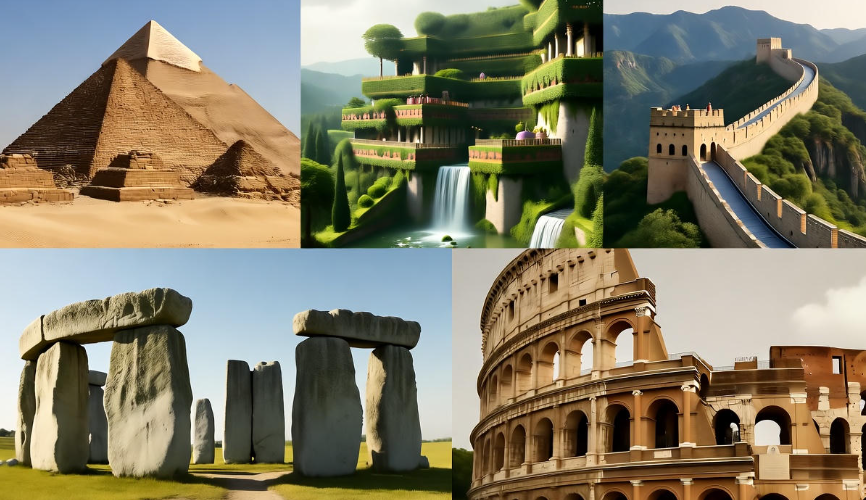
The Great Pyramid is the oldest of the Seven Wonders of the Ancient World and the only one still standing. Built around 2560 BCE, it is estimated to weigh 6 million tons.
-
Gravity-defying aspect: The pyramid’s massive stones, some weighing up to 80 tons, were lifted and aligned with such precision that they fit together without mortar. The structure has stood for over 4,500 years, surviving earthquakes and erosion.
-
How it was possibly done: The Egyptians might have used ramps, levers, and sheer manpower. But the exact method is still debated, making it a marvel that seems to resist gravity.
-
Fun fact: The pyramid’s sides are aligned almost perfectly with the four cardinal directions. This precision adds to the wonder of its design.
| Feature | Details |
|---|---|
| Built | 2560 BCE |
| Location | Giza, Egypt |
| Height | 146.6 meters (original) |
| Material | Limestone blocks (2.3 million) |
2. Stonehenge – England
Stonehenge is not just a circle of massive stones; it’s a mystery frozen in time. The monument dates back to 3000-2000 BCE and continues to baffle archaeologists.
-
Gravity-defying aspect: Some stones, called sarsens, weigh over 25 tons. The lintels (horizontal stones) are perfectly balanced atop vertical stones without any modern cement or metal support.
-
Construction mystery: Stones were transported from over 200 kilometers away using primitive tools, sledges, and manpower. The effort required is staggering.
-
Why it amazes: The alignment with the summer solstice shows not only engineering skill but also astronomical knowledge.
| Feature | Details |
|---|---|
| Built | 3000–2000 BCE |
| Location | Wiltshire, England |
| Stones | 30 sarsens, 70 smaller bluestones |
| Purpose | Likely ceremonial or astronomical |
3. Machu Picchu – Peru
Perched 2,430 meters above sea level, Machu Picchu is an Incan citadel built in the 15th century. Its stonework appears almost impossible given its mountainous location.
-
Gravity-defying aspect: The Incas used a technique called “ashlar masonry,” where stones are cut to fit perfectly without mortar. This allowed the structures to withstand earthquakes.
-
Ingenious design: Terraces and drainage systems prevent landslides, keeping the city stable despite heavy rains.
-
Interesting point: Many stones are so tightly fitted that even a knife blade cannot slide between them.
| Feature | Details |
|---|---|
| Built | 1450 CE |
| Location | Cusco Region, Peru |
| Altitude | 2,430 meters |
| Technique | Ashlar masonry (no mortar) |
4. The Moai Statues – Easter Island
These iconic statues, called Moai, were carved between 1400 and 1650 CE by the Rapa Nui people. They are famous for their massive heads and imposing presence.
-
Gravity-defying aspect: Some statues weigh over 80 tons and were moved several kilometers without wheels. They seem almost to “stand” by themselves, balanced perfectly on stone platforms.
-
Theories on transport: Some researchers believe the statues were “walked” upright using ropes in a rocking motion, which would have required extraordinary coordination.
-
Cultural importance: The Moai are thought to represent ancestors and hold spiritual significance, adding a layer of meaning to their construction.
| Feature | Details |
|---|---|
| Built | 1400–1650 CE |
| Location | Easter Island, Chile |
| Height | Up to 10 meters |
| Weight | 12–82 tons |
5. The Hanging Gardens of Babylon – Iraq
Although its existence is debated, the Hanging Gardens are described as a miraculous terraced garden built by King Nebuchadnezzar II around 600 BCE.
-
Gravity-defying aspect: Ancient texts describe gardens that seemed to float above the ground, with trees and flowers cascading on terraces.
-
Engineering marvel: Ancient engineers likely used an intricate irrigation system, including pumps and aqueducts, to water plants on multiple levels.
-
Legacy: Even if the exact gardens are lost to history, their legend shows human ingenuity striving to bend nature—and gravity—to beauty.
| Feature | Details |
|---|---|
| Built | ~600 BCE |
| Location | Babylon, Iraq |
| Description | Multi-level terraced garden |
| Significance | Showed architectural and engineering prowess |
Why These Structures Amaze Us
-
Precision: Ancient builders achieved alignment and balance without modern tools.
-
Durability: Many have survived thousands of years of natural disasters.
-
Mystery: The exact methods are often unknown, inspiring endless fascination.
-
Cultural Significance: These structures are not just engineering feats; they tell stories about beliefs, societies, and priorities.
Lessons Modern Engineers Can Learn
-
Innovation with simple tools: Ancient architects achieved complex results without computers or cranes.
-
Respect for nature: Many structures were built to adapt to their environment, like Machu Picchu’s terraces.
-
Precision and patience: Every stone and alignment required careful planning and execution.
FAQs
Q1: How did ancient people move massive stones without modern machines?
A1: They likely used a combination of levers, rollers, sledges, ramps, and human coordination. Some techniques are still being studied, and certain methods remain mysterious.
Q2: Why are some ancient structures still standing after thousands of years?
A2: Careful design, durable materials, and clever engineering, like earthquake-resistant techniques, allowed them to survive the test of time.
Q3: Did these structures have spiritual or ceremonial purposes?
A3: Yes! Many were built for religious, astronomical, or cultural significance, like Stonehenge or the Moai statues.
Q4: Can modern engineers replicate these ancient wonders?
A4: While possible, it would require massive resources and labor. Ancient builders achieved these feats with simpler technology and a lot of ingenuity.
Q5: Which structure is considered the most gravity-defying?
A5: The Great Pyramid of Giza often takes the top spot because of its massive size, precise construction, and longevity.
Conclusion
These ancient structures are more than historical artifacts. They are reminders of human creativity, determination, and our eternal desire to challenge the impossible. From the deserts of Egypt to the mountains of Peru, humans have always sought to defy gravity—and in doing so, left us marveling at their genius. 🌍✨